Right-size the unit for your household
We size by real hot water demand and incoming water temperature, not by guesswork. Proper sizing reduces nuisance shutdowns and temperature swings.
Serving Honolulu, Hawaii & surrounding areas
Mon–Fri 8am–6pm · Sat 9am–2pm
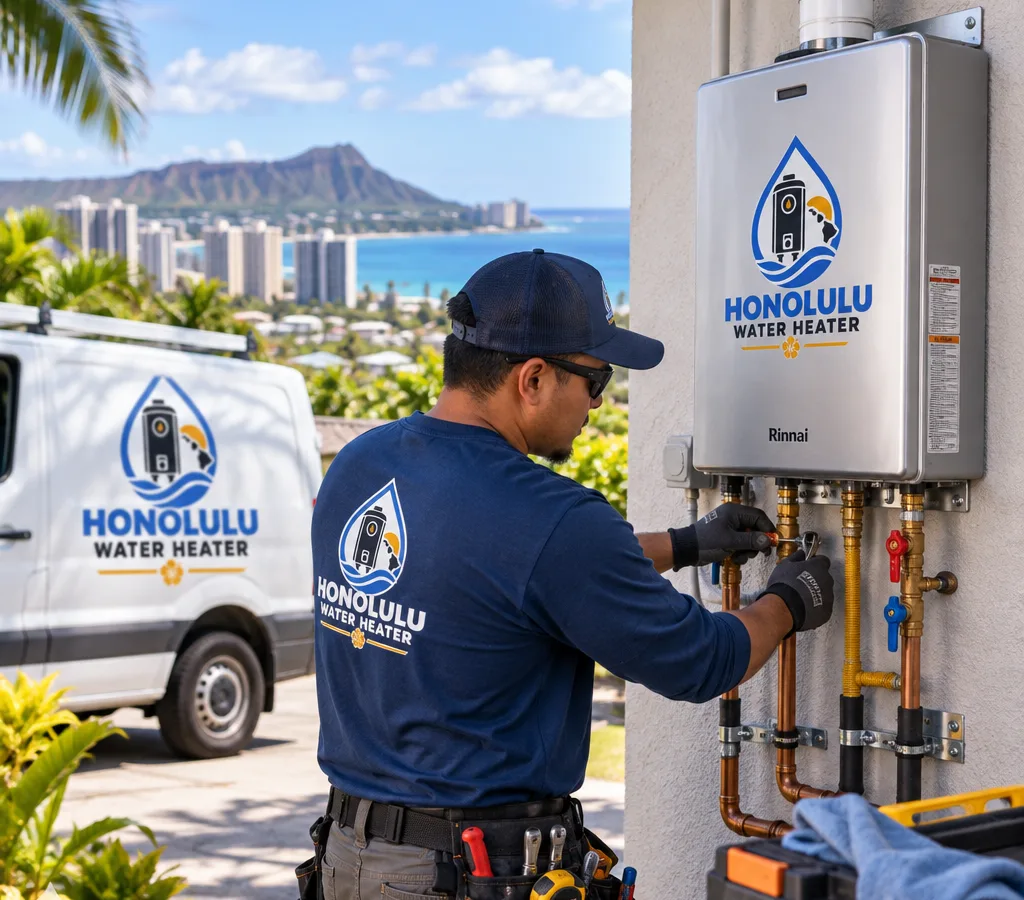
Tankless water heaters · Honolulu
Get a clean, code-aware install or replacement with straightforward pricing, careful gas or electric setup, and a plan for maintenance that fits island conditions.
Local tankless expertise
If you are searching for a tankless water heater installer in Honolulu, you are probably trying to solve one of three problems: you want reliable hot water, you want to replace an aging unit before it fails, or you are converting from a tank and want to know what it really takes.
Honolulu Water Heater installs and services tankless systems across Honolulu from our shop at 547 Halekauwila Street, Suite 5, Honolulu, HI 96813. We handle new tankless water heater installation Honolulu homeowners request, like replacing an older wall unit in a condo utility closet, as well as tank to tankless conversion work where the piping, venting, electrical, and gas (if applicable) need to be brought into line.
Tankless is a great fit when the installation is designed correctly. That means sizing the unit to your home's demand, confirming fuel and venting requirements, installing the right isolation valves for future tankless water heater flushing, and setting expectations for ongoing tankless water heater maintenance. You get a cleaner install and a system that is serviceable, which matters as much as the brand on the front.
Installation standards
We size by real hot water demand and incoming water temperature, not by guesswork. Proper sizing reduces nuisance shutdowns and temperature swings.
A tankless should be installed with isolation/service valves so annual or as-needed tankless water heater flushing is straightforward and doesn't require cutting pipe.
For gas units, the vent category and clearances matter. We verify vent material, termination location, and combustion air needs before we set the unit.
Tankless water heater replacement should leave the area safer and easier to service: secure mounting, labeled shutoffs, and piping that isn't stressed or improvised.
We diagnose ignition issues, flow sensor problems, error codes, and scale-related performance changes, then give you repair versus replacement options.
You get a written plan that spells out what is included—and what is not—so you can compare apples to apples when pricing out a tankless install.
Conversion requirements
A tank to tankless conversion is not just swapping equipment. In many Honolulu homes, the existing tank heater was installed with simpler venting, different gas or electrical requirements, and no service valve setup for flushing.
Conversion work commonly includes:
If you are comparing options, a conversion quote should state exactly what is being reused and what will be replaced. That is the difference between an install that works on day one and one that becomes a repeat service call.
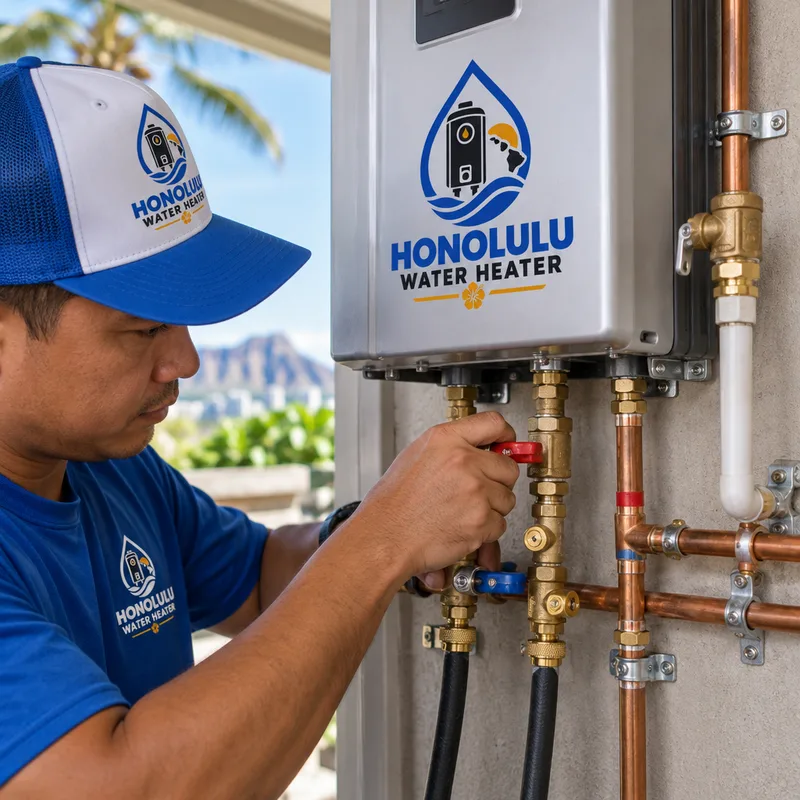
Honolulu installation pricing
Tankless water heater installation cost in Honolulu typically ranges from $2,500 to $6,500+ depending on fuel type, venting, and how much re-piping or electrical work is required. A straightforward replacement of an existing tankless unit is often $2,500 to $4,500, while a tank to tankless conversion with new venting and line upgrades is more often $4,000 to $6,500+.
Your final price changes most with vent routing, gas line sizing for gas units, electrical upgrades, access in condo closets versus open garages, and whether shutoffs and isolation valves already exist. Exact pricing is confirmed after an on-site inspection of the current setup and utility connections.
We look at your current heater location, fuel source, venting route if gas, and hot water demand. We also confirm access constraints common in Honolulu condos and older homes.
You get a clear scope for the recommended unit and any required upgrades. If you are deciding between repair and replacement, we lay out the tradeoffs in plain language.
We remove the old unit, mount the new heater securely, connect water and fuel or electric, and install isolation/service valves when they are not already present.
We bring the system up, check for leaks, verify operation and temperature stability, and show you shutoff locations and the basic care schedule.
We recommend a tankless water heater maintenance routine that matches your usage. That usually includes periodic filter checks and scheduled tankless water heater flushing to control scale.
Protect long-term performance
A tankless heater is a high-efficiency heat exchanger with narrow waterways. That design is why it performs well, and it is also why scale and debris matter. The single best way to keep performance stable is regular tankless water heater maintenance, with tankless water heater flushing done on a schedule that matches your water conditions and usage.
Flushing is a controlled descaling procedure using the built-in service ports—another reason we insist on proper isolation valve installation. Skipping flushing often shows up as lower hot water output, longer waits for hot water, or recurring error codes.
If you already have a unit installed and you are not sure whether it has the correct service valve kit, we can check it during a service visit and recommend the cleanest path: add valves for future maintenance, repair the current setup, or plan a tankless water heater replacement if the unit is near end of life.
For other hot water issues that are not tankless-specific, our core water heater repair in Honolulu work covers troubleshooting leaks, temperature problems, and inconsistent hot water so you can decide whether repair or a new tankless install is the better move.
Customer experiences
“We replaced an older tankless unit in our condo and the install looked cleaner than what we had before. They explained the service valves and what flushing actually involves, which no one had ever done for us.”
“We were considering a tank to tankless conversion and wanted straight answers about venting and what would need to change. The scope was detailed and the work passed without drama.”
Helpful answers
Many tankless installations and replacements require permits, especially when gas piping, venting, or electrical circuits are modified. The safest approach is to assume permitting may be required and confirm during the on-site evaluation based on what will change at your property.
A like-for-like tankless water heater replacement is often completed in a single day when venting and utilities stay in the same place. If vent routing changes, gas lines must be upsized, or electrical work is needed, the timeline can extend because the scope is larger and may require coordination for approvals or inspections.
Tankless water heater flushing typically includes isolating the unit, circulating descaling solution through the heat exchanger via the service ports, rinsing, cleaning inlet screens, and verifying stable operation afterward. If the heater does not have isolation/service valves, adding them may be recommended so future flushing can be done without cutting pipe.
Gas tankless units can deliver higher hot water output, but they require correct venting and adequate gas line capacity. Electric tankless avoids venting but may require significant electrical capacity; in many buildings, panel limitations become the deciding factor. We confirm what your space can support before recommending a unit.
Repair makes sense when the issue is isolated, like a failed sensor, ignition component, or clogged inlet filter, and the heat exchanger is still in good condition. If scale damage is severe, parts are unavailable, or you are facing repeated shutdowns after prior repairs, tankless water heater replacement is often the more reliable path.
If you can share the current heater type—tank, tankless gas, or tankless electric—approximate location, and any known issues such as leaks, error codes, or inconsistent temperature, it speeds up quoting. Photos of the existing unit area, vent route if gas, and the electrical panel can also help us prepare the right options for the visit.
Plan your tankless project
Tell us what you have now—tank or tankless, gas or electric—and what you want to change. We will confirm feasibility on-site, explain the options in plain terms, and provide a written scope for installation, repair, or replacement.